All projects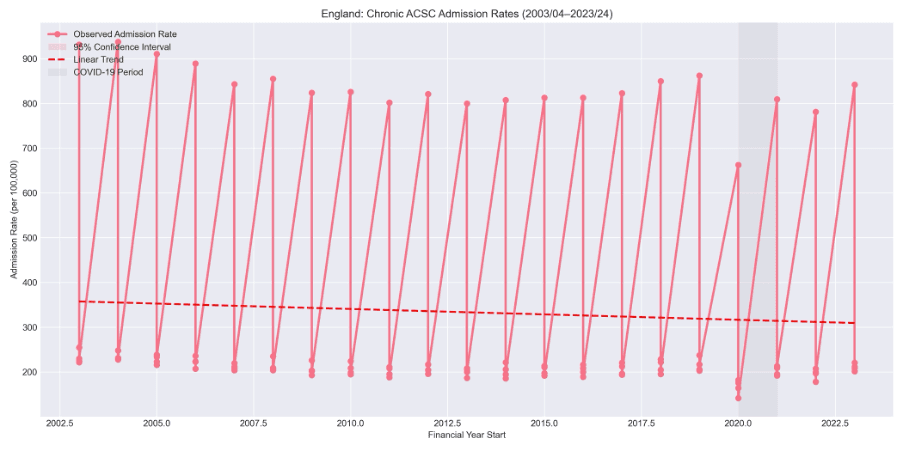
NHS ACSC Forecasting
21 years of NHS data — trends, inequality, forecasting.
Description
A longitudinal analysis of 21 years of NHS unplanned-admission data for chronic ambulatory-care-sensitive conditions in England (2003/04–2023/24), examining how trends vary by age, sex, and deprivation — with a forecasting model for service planning.
Context
I worked end to end with ~57,600 records: cleaning and standardisation, feature engineering (financial-year labels, CI-width uncertainty markers), exploratory analysis across demographic dimensions, and predictive modelling.
What I found
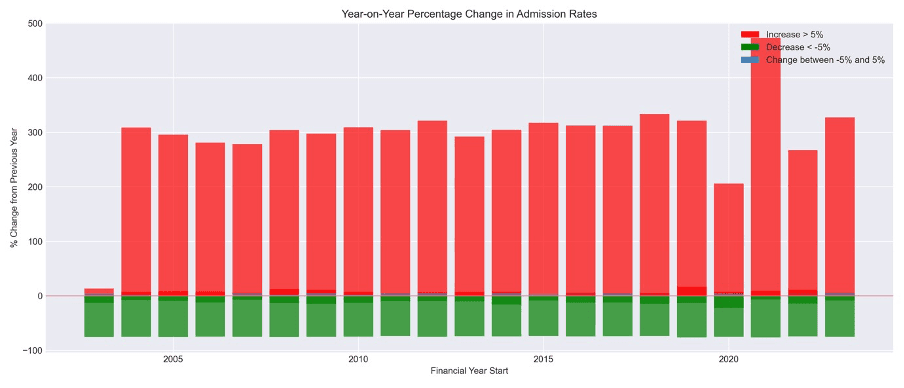
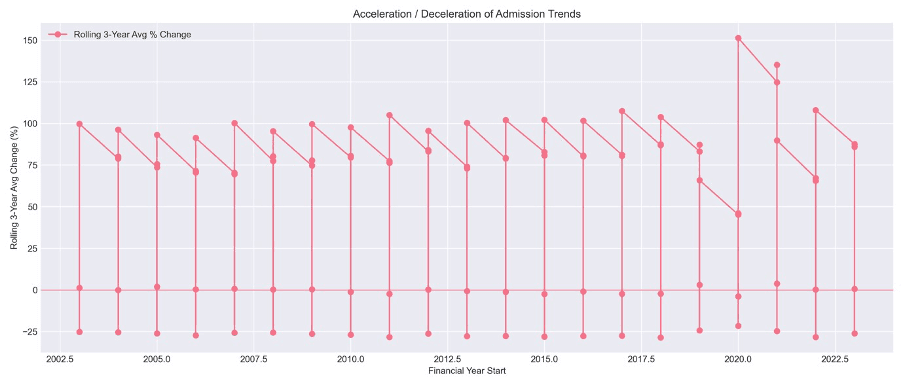
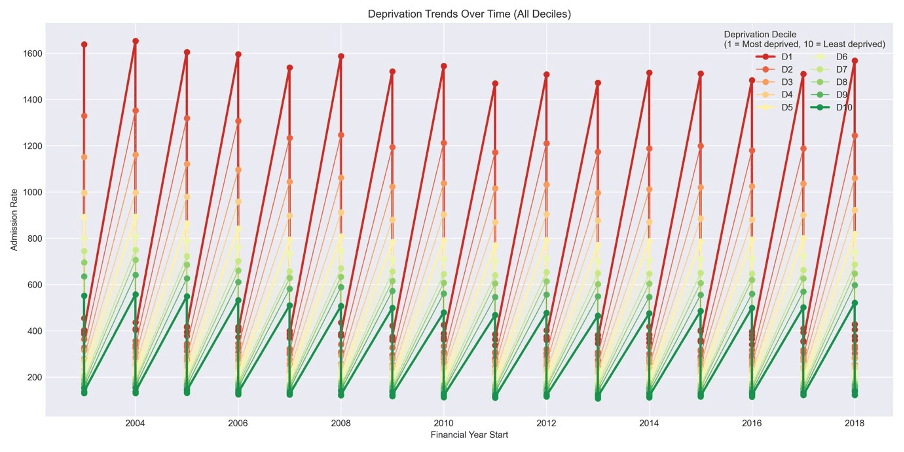
- Identified a volatile 'sawtooth' admission pattern with an overall ~8% rise across the period and a sharp COVID-era dip in 2020/21.
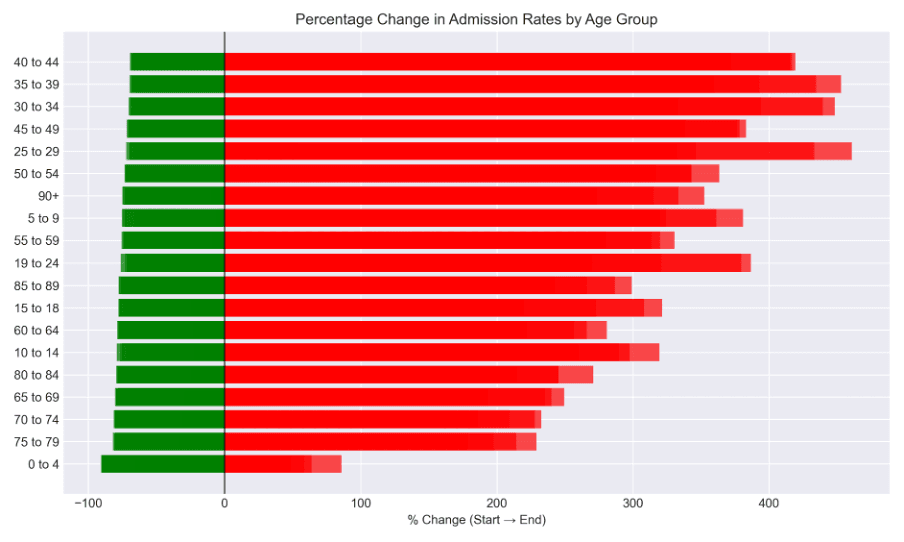
- Quantified demographic drivers: age as the strongest (75+ rates several times higher than working-age), a persistent deprivation gap (most-deprived areas markedly higher), and a small but consistent sex difference.
- Built and compared two forecasting models — linear regression as an interpretable baseline vs Prophet for non-linearity and changepoints. Prophet substantially outperformed (RMSE ~39 vs ~231; R² ~0.89 vs negative), and projected a gradual rise toward ~945 per 100,000 by 2028/29.
NHS · ACSC admissions
Forecast vs. baseline
actual
forecast
Screenshots